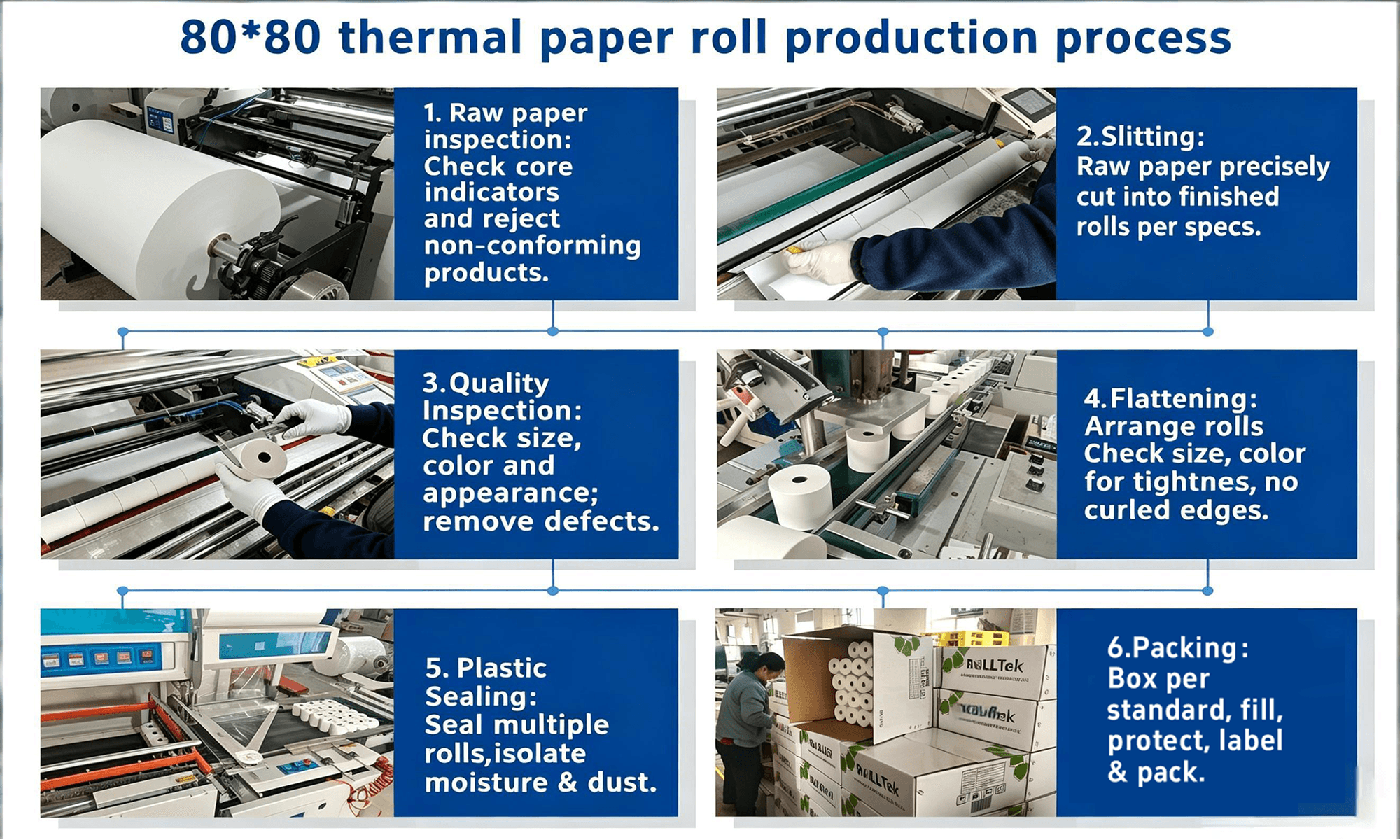
Thermal paper is one of the most widely used specialty papers in the world — yet most people who handle it daily have little understanding of how it works. From supermarket receipts to airline boarding passes, lottery tickets to medical wristbands, thermal paper underpins billions of transactions and records every year. This guide explains the chemistry, types, applications, and selection criteria for thermal paper, providing the technical foundation that distributors, importers, and purchasing managers need.
How Thermal Paper Works: The Chemistry
Thermal paper is coated with a heat-sensitive layer containing three key components: a leuco dye (a colorless dye precursor), a developer (an acid compound that reacts with the dye), and a sensitiser (which lowers the activation temperature).
When heat is applied — by a thermal print head — the sensitiser melts, allowing the leuco dye and developer to mix and react. This reaction produces a colored compound, typically black, creating the printed image. The reaction is irreversible under normal conditions, which is why thermal prints are permanent.
The thermal coating is typically applied over a base paper, with a protective topcoat applied over the thermal layer to improve image stability, chemical resistance, and printhead life. The quality of all three layers — base paper, thermal coating, and topcoat — determines the overall performance of the thermal paper.
Types of Thermal Paper
Standard thermal paper is the most common type, used for POS receipts, ATM slips, and general printing applications. It typically has a white base with a black thermal image and is available in a wide range of widths and roll diameters.
Top-coated thermal paper has an additional protective layer over the thermal coating, improving resistance to water, oils, and UV light. This is essential for applications where the receipt may be exposed to moisture or handling, such as restaurant receipts or parking tickets.
Thermal transfer base paper is designed for use with thermal transfer ribbons, which melt a wax or resin ink onto the paper surface. This produces a more durable image than direct thermal printing and is used for applications requiring long-term image stability.
Synthetic thermal paper uses a plastic (typically polypropylene) base instead of cellulose paper, providing waterproof and tear-resistant properties. Used in outdoor applications, healthcare wristbands, and industrial environments.
Colored thermal paper is available in a range of base colors, used for applications where color coding is required, such as multi-part forms or security applications.
Key Performance Parameters
Thermal sensitivity (or activation energy) determines how much heat is required to produce a visible image. Higher sensitivity papers can be used with lower print head temperatures, reducing energy consumption and extending print head life. Sensitivity is typically expressed as the optical density achieved at a specific temperature.
Image stability depends on the paper construction, printed density, storage temperature and humidity, light, plasticisers, oils, and other chemical exposure. Define a retention target and validate the selected grade under representative conditions instead of relying on a universal service-life figure.
Chemical resistance is application-specific. Uncoated and top-coated grades should be compared using the contaminants, contact time, temperature, and acceptance criteria expected in use.
Print-speed compatibility depends on the printer model, printhead energy, settings, paper sensitivity, barcode requirements, and maintenance condition. Confirm the operating window through device-specific trials.
Selecting the Right Thermal Paper
Application environment is the primary selection criterion. Indoor retail applications with minimal chemical exposure can use standard thermal paper. Outdoor, food service, or industrial applications require top-coated or synthetic grades.
Regulatory and customer requirements must be reviewed for the exact material, intended use, and destination. Request current grade-specific declarations or test evidence and confirm applicability before approval.
Printer compatibility must be confirmed against the specific model, paper path, dimensions, core, winding direction, sensitivity, settings, and test output. An unsuitable construction can cause poor print or feeding performance.
Total cost of ownership should consider not just paper price but also print head life (affected by paper quality), image stability (affecting customer satisfaction and dispute resolution), and compliance costs (documentation, testing).
Conclusion
Thermal paper is a technically sophisticated product that requires careful selection to match the application requirements. Understanding the chemistry, performance parameters, and regulatory requirements enables distributors and purchasers to make informed sourcing decisions that balance performance, compliance, and cost.
Key Takeaways
- Thermal paper works through a heat-activated chemical reaction between a leuco dye and developer
- Five main types: standard, top-coated, thermal transfer base, synthetic, and colored
- Key parameters: sensitivity, image stability, chemical resistance, and print speed compatibility
- Material declarations and market requirements must be verified for the quoted grade and destination
- Printer compatibility requires model-specific dimensional, sensing, setting, and sample checks
Reference Sources
Related Industry Pages
- Retail & POS: Apply thermal-paper fundamentals to receipt rolls, payment terminals, and branded formats.
- Transportation: Translate material, sensing, and exposure fundamentals into ticket-system requirements.
- Government & Legal: Define retention, storage, and document-control conditions before selecting record media.
Frequently Asked Questions
What should buyers confirm before ordering what is thermal paper? a complete technical guide?
Confirm the exact application, printer or terminal fit, destination market, required documents, and approval process before issuing the purchase order for this education project.
Is the article summary enough for supplier approval?
No. Understanding thermal paper chemistry, types, applications, and how to choose the right thermal paper for your business needs. Buyers should still request grade-specific documents, test evidence, and representative samples before approving bulk production.
Which internal pages should I review next?
Review the relevant industry page, compare product specifications, and use the contact or quote forms to align the final requirement set with the quoted material.
Next Step
If you need support on specifications, documentation scope, or sample planning, continue with one of these internal pages:
- Request Samples to validate material, dimensions, and printer fit.
- Get a Quote to align the RFQ with width, OD, core, chemistry, packing, and destination requirements.
- Contact Us for project-specific technical review.
Related Posts
Send Your Inquiry Today
Tell us the product, dimensions, material, quantity, and destination. We will review the right specification before quoting.
Submit your requirement